 Winton Eliott
Ever sat in a meeting where everyone argues for hours and nothing gets decided? Or tried launching a new project only to face confused looks and quiet resistance? That’s the chaos that happens when people aren’t truly on board.
The Japanese have a smarter way—Nemawashi (根回し). It means quietly building consensus before any big decision. Instead of springing surprises, you chat, listen, and get everyone’s thoughts early.
What Is Nemawashi? Understanding the Decision-Making Philosophy
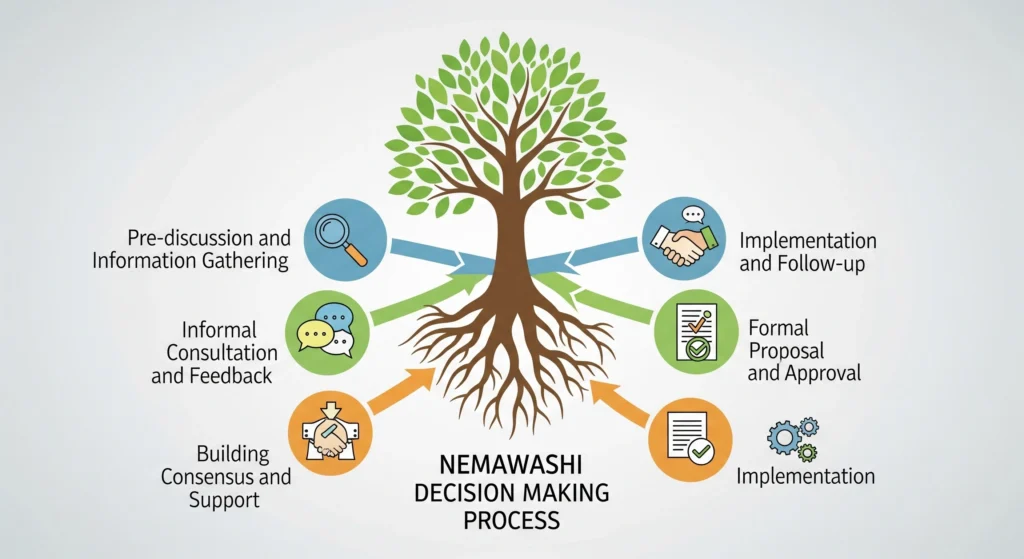
Imagine you’re about to move a tree—you can’t just yank it out and hope it survives, right? You have to prep the roots first. That’s exactly what Nemawashi (根回し) means: “going around the roots.”
In Japan, it’s a way of making decisions where you talk to people before the big meeting—checking how they feel, fixing concerns, and shaping ideas together. Instead of dropping a surprise proposal and hoping everyone cheers, you’ve already done the quiet work behind the scenes.
Western styles often chase speed and authority, but Nemawashi plays the long game—it’s about trust, harmony, and making sure the “tree” doesn’t die after you plant it. Studies even show companies using Nemawashi face way fewer problems when rolling out new ideas. Slow roots, strong growth.
The Core Principles Behind Nemawashi Decision Making
To really get why Nemawashi works so well, you’ve got to understand what it’s built on—it’s not just about “talking things out.” It’s a whole philosophy of respect, patience, and teamwork that keeps people on the same page before chaos breaks loose.
Respect for Hierarchy and Relationships
Picture a company like it’s high school—seriously, you wouldn’t just waltz past your math teacher and drop your wild ideas on the principal’s desk, right? Nemawashi totally gets this vibe. The whole deal is you chat things through with everyone, from the big boss down to the new kid who just started last week. It’s not about leapfrogging over people; it’s about earning trust one conversation at a time.
Prevention Over Cure
Ever tried cleaning your room only after your parents yelled at you? Yeah, not fun. Nemawashi works the opposite way—it’s all about handling small issues before they explode. By checking in early and quietly, you stop resistance before it even starts. Smooth sailing beats damage control any day.
Face-Saving and Dignity
Let’s talk about “saving face.” In Japan, it’s kind of a big deal. Basically, it means you help people keep their cool and pride intact. Nemawashi nails this by letting folks have their say in private, so nobody gets put on blast in front of the group. Think about it—being able to disagree without turning it into a soap opera? That’s some next-level social judo right there.
Collective Responsibility
When a decision finally happens, no one’s pointing fingers if it goes wrong. Everyone owns it together. It’s like a team project where everyone actually does their part. That shared responsibility creates confidence—and lets people take risks without fear of being thrown under the bus.
The Step-by-Step Nemawashi Decision-Making Process
Okay, so Nemawashi might sound chill and “go-with-the-flow,” but it’s actually super organized when done right. Think of it like planting a tree—you can’t just dig a hole and hope for the best. There’s a method. Here’s how the process works, step by step.
Step 1: Identify Stakeholders and Map Influence Networks
Before you start chatting people up, figure out who matters most in this decision. That means everyone who will be affected—or has the power to affect it.
- The big decision-makers
- The people who’ll actually do the work
- Teams who might get pulled into it indirectly
- And yes, those “office influencers” everyone listens to even if they’re not the boss
Draw a little map if you have to—who’s connected to who, who’s likely to cheer you on, and who might throw up roadblocks. It’s like planning your strategy before starting a group project.
Step 2: Conduct Private, Informal Conversations
Now comes the fun part: quiet, one-on-one chats. Start with the folks who already “get” you—it’s easier to build momentum that way.
- Share your idea like it’s still evolving, not a done deal
- Ask questions that make people think, not just nod
- Listen—really listen—without getting defensive
- Jot down notes like a detective gathering clues
According to a Harvard Business Review study, these casual pre-meeting convos make formal meetings 65% more successful. Translation? Less arguing, more nodding.
Step 3: Refine the Proposal Based on Feedback
All right, time to take all the comments you got-good, bad, and the ones that make you roll your eyes-and actually do something with them. Maybe your schedule is way too ambitious and needs a reality check, or maybe someone tossed out a tiny change that actually makes everything click. This isn’t about some popularity contest. You just want this thing to be smarter, tougher, and not fall apart the second it hits real life. This isn’t just “my genius idea” anymore-it’s turning into “our thing.” That’s when stuff really starts to work.
Step 4: Build Coalition Support
Find your allies—the people who believe in what you’re doing and can vouch for it. These folks are your hype squad.
- They show others your idea isn’t just a solo dream
- They help you spot weak spots you missed
- They give your proposal credibility across teams
When others see support growing, skepticism starts to fade. Momentum builds quietly—but powerfully.
Step 5: Conduct Additional Rounds of Consultation
Don’t just slap on the changes and call it a day. Go back, show folks what you did with their input, and let them see their fingerprints on the plan. This is the moment when the biggest doubters suddenly go, “Wait, you actually heard me?” That’s how you flip someone from throwing shade to actually backing you up.
Step 6: Present at the Formal Meeting
By now, the big meeting isn’t a battlefield—it’s a victory lap. Everyone’s already on board.
- You publicly thank people for their input
- Final details get polished
- The group officially signs off
- And everyone leaves feeling like they built something together
- Meetings stop being painful arguments and start feeling like a shared celebration.
Step 7: Continue Engagement During Implementation
Nemawashi doesn’t just get cut off once you get the green light. You have to keep checking in, having chatter with people as things get moving. Be able to fix problems before they become disasters, give high-fives for little wins, and keep everyone in the loop. That’s what cements it underneath so it doesn’t just fizzle out when the kickoff hype is over.
Benefits of Implementing Nemawashi in Modern Organizations
When teams use Nemawashi the right way, it’s like switching from chaos mode to calm, confident teamwork. Here’s what actually happens when people take the time to do it right:
Reduced Implementation Resistance
You know how annoying it is when a teacher suddenly changes the class project without warning? Everyone freaks out, right? Nemawashi avoids that. When people are looped in before decisions are made, they’re way more chill about the final outcome. McKinsey even found that employee support jumps 53% when folks are consulted early. People back what they help build.
Higher Quality Decisions
Two heads are better than one—but ten thoughtful heads? Way better. Nemawashi invites different voices to spot problems early and suggest improvements before it’s too late. You end up with smarter, stronger decisions that actually work in real life, not just on paper.
Stronger Organizational Relationships
You know, just asking people what they think? That’s how you get real trust going. Folks start to feel like you actually give a damn about their opinions—suddenly, work’s not some weird Hunger Games arena. It’s more like a crew that, shockingly, doesn’t mind hanging out together. Maybe even enjoys it.
Faster Implementation
Sure, Nemawashi takes extra time at the start. But once everyone’s on board, the rollout happens so much faster. No drama, no confusion—just people moving in the same direction because they already agreed on the plan.
Enhanced Psychological Safety
When everyone knows their input isn’t just for show, the whole vibe shifts. People stop bottling stuff up—they’ll toss out wild ideas, question the boss, maybe even poke holes in a plan. And honestly, that’s when things get interesting. Creativity goes up, and everybody’s pushing each other to do better. It’s a win all around.
Challenges and Considerations When Adopting Nemawashi
Okay, Nemawashi sounds awesome—and it is—but it’s not all sunshine and cherry blossoms. Adopting it, especially in fast-paced Western-style workplaces, comes with a few hurdles you’ve got to be ready for.
Time Investment
Honestly, Nemawashi isn’t for the impatient. You can’t just barrel through—building genuine trust and having those low-key chats eats up hours (and sometimes your sanity). If you’re the “just get it done already” type, this whole process might drive you a little nuts. But, plot twist: all that groundwork? It pays off.
Cultural Adaptation Required
Honestly, in most Western offices, folks just blurt out whatever’s on their minds. Nemawashi? Yeah, that’s a whole different ball game. Everything’s got this layer of subtlety, and you’ve gotta pick up on stuff that’s not actually said out loud. Kinda trippy at first, not gonna lie. Teams have to chill out a bit—talk less, listen more, and catch those sneaky hints floating around. It’s like swapping your Spotify playlist from punk rock to some smooth jazz. Same tools, totally different vibe.
Potential for Manipulation
Here’s the danger zone: if people use Nemawashi just to secretly push their own agenda, it turns toxic fast. Imagine someone “consulting” only the people who already agree with them—ugh. That’s not Nemawashi; that’s politics. To make it work, you’ve got to stay honest, include different opinions, and keep the goal about shared understanding, not sneaky wins.
Not Suitable for Every Decision
Let’s be real, not every problem needs this much pomp and circumstance. If the place is literally on fire, you’re not gonna schedule a meeting to discuss options; you grab the fire extinguisher and go. Nemawashi is for the big stuff, decisions where you actually need everyone’s buy-in in order to avoid chaos. The real skill is figuring out when to play it slow and when to just go with your gut.
Practical Tips for Implementing Nemawashi in Your Organization
Ready to bring Nemawashi into your team? Think of it like learning a new game—start easy, practice, and celebrate the wins. Here’s how to do it without freaking people out.
Start Small
Don’t try a full-on Nemawashi for the next company rebrand. Practice on medium-stakes stuff—like changing a meeting time or testing a process tweak. It’s like learning to skateboard on a driveway before hitting the ramp.
Provide Training
Don’t just toss people into the deep end—tell them why this stuff matters, then show ‘em how. Quick little role-plays work wonders. Seriously, feels goofy for like two seconds, then everyone gets into it. It’s basically rehearsal, minus the Shakespearean meltdowns.
Create Consultation Templates
Nobody likes winging it, especially in one-on-ones. Whip up some question prompts so the convo doesn’t go off the rails. Stuff like, “What’s bugging you lately?” or “Got any ideas to make this better?” Keeps things real, not robotic. Just a handy little rescue card for your future self.
Track Stakeholder Feedback
Don’t trust your brain to remember everything—grab a simple spreadsheet or whatever you use for notes. List who you chatted with, what they threw out there, and what actually changed. That way you’ve got proof you listened (and a reminder that the quiet folks sometimes drop pure gold).
Set Realistic Timelines
Build consultation time into your plan from the start. Don’t act surprised when “quiet chats” take a week. Treat them like actual work—not optional chit-chat—so nobody has to rush or skip steps.
Celebrate the Process
Seriously, if Nemawashi gets results, don’t just nod and move on—make some noise. Give credit where it’s due. Call out the folks who pitched in and actually show off how their ideas made a difference. People love to feel seen. It’s like, “Hey, look, your input wasn’t just heard—it made stuff happen!” Next time, they’ll be twice as likely to jump in.
Adapt to Your Culture
Don’t just copy-paste the whole Japanese playbook and expect it to work. You gotta remix it. Grab the heart of Nemawashi—stuff like listening, respect, getting feedback early—but make it sound and feel like your team.
Nemawashi vs. Other Decision-Making Frameworks
So how does Nemawashi stack up against the other big ways people make decisions? Think of it as the calm, relationship-focused cousin in a family full of loud, opinionated siblings.
Versus Autocratic Decision-Making
Autocratic style is the “because I said so” method. Super fast, super clear—but people often roll their eyes or quietly resist afterward. Nemawashi takes a little longer, but it earns real support. Instead of pushing orders downhill, it builds agreement from the ground up.
Versus Democratic Voting
Democratic decision-making sounds fair, right? Everyone votes, majority wins. But here’s the problem—it creates winners and losers. Nemawashi doesn’t do that. It aims for true consensus, so no one leaves the table sulking because their idea “lost.” Everyone feels heard and represented.
Versus Consultative Leadership
Consultative leaders do ask for input—but usually, they still make the final call. Nemawashi goes one step deeper. It’s about aligning people first so that by the time the decision is official, everyone’s already on board. It’s not “my idea” anymore—it’s our decision.
Versus Agile Decision-Making
Agile is all about speed and flexibility—testing, failing, improving, repeat. Nemawashi actually pairs beautifully with that. Before your next sprint or big pivot, a little Nemawashi groundwork can make sure the whole team’s ready to move in sync, not tripping over misunderstandings.
Real-World Applications of Nemawashi Decision Making
Nemawashi isn’t just some fancy boardroom ritual. It works everywhere people need to agree before taking action. Here’s what that looks like in real life:
Technology Companies
Before launching new app features or product updates, tech teams use Nemawashi to talk with engineers, designers, and users first. It’s like debugging human reactions before debugging the code—so nothing crashes on launch day.
Healthcare Organizations
Hospitals aren’t run by robots (well, not yet). Admins don’t just toss out new policies and expect everyone to salute. They actually chat with doctors, nurses, janitors—whoever’s in the trenches. Somebody usually pipes up, “Uh, this fancy new charting thing might look slick, but it’s gonna be a hot mess when we’re sprinting during a code blue.” Nemawashi at its finest—keeping chaos and collective eye-rolls to a minimum.
Educational Institutions
Universities? Same deal. They’re not about to blindside professors with some bold new graduation rule outta nowhere. First, they tiptoe around, pulling opinions from all corners of campus. By the time the idea lands in front of the academic committee, it’s old news—everyone’s already on board, and no one’s wasting time squabbling over the little stuff.
Nonprofit Organizations
For nonprofits, where passion runs high and opinions run higher, Nemawashi is a lifesaver. Before changing strategies or missions, leaders use it to align board members, donors, and volunteers—so everyone feels united around the same cause, not divided by it.
Conclusion: Embracing Consensus-Building for Better Organizational Decisions
Think of Nemawashi as the difference between a chaotic group project where everyone argues at the last minute and a smooth one where friends quietly plan ahead — fewer tears, more high-fives. By doing the quiet work of chatting, fixing problems early, and getting people on the same page, decisions actually get made and stick.