 Winton Eliott
Bacterial meningitis is one of the scariest infections out there. I’ve seen healthy people go from “totally fine” to fighting for their life in a hospital bed in just hours.
No joke—this disease moves fast, and it does not play fair. The good news? We actually have vaccines that stop the most dangerous types. And honestly, that’s huge.
Knowing about them can literally save your life or someone you love.
What Is Bacterial Meningitis and Why Should You Care?
Bacterial meningitis is a serious infection of the meninges—the protective layers around your brain and spinal cord. That’s your brain’s armor.
When bacteria break through that armor, things get bad fast.
At first, it can feel like a normal flu—fever, headache, stiff neck. You might think, “I’ll just sleep it off.” But then suddenly it can turn into seizures, confusion, and even unconsciousness.
This disease can kill in less than 24 hours. That’s not drama—that’s reality.
Even when people survive, some don’t fully recover. We’re talking hearing loss, brain damage, and lifelong disabilities. It’s heartbreaking stuff.
The main bacteria that cause it are:
- Neisseria meningitidis (meningococcal)
- Streptococcus pneumoniae (pneumococcal)
- Haemophilus influenzae type b (Hib)
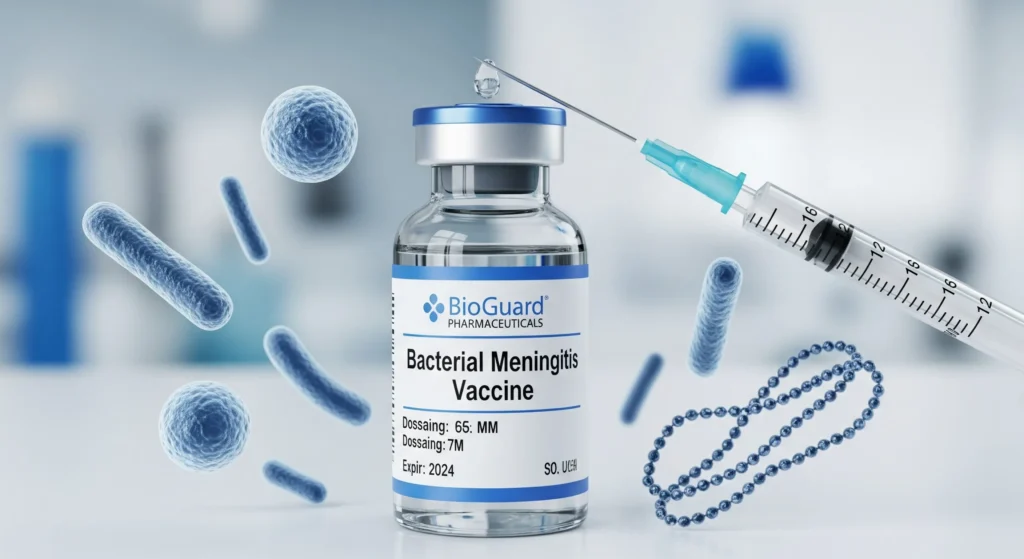
Here’s the hopeful part: there are vaccines for all three. Real protection. Real prevention. Real science doing something amazing.
- Read Also: Why is Brain Health Is Important And How To Improve Our Brain Health?
- Read Also: How Do Brain Cells Replace Themselves And How Often?
Understanding the Different Bacterial Meningitis Vaccines
When people say “the meningitis vaccine,” it sounds like one magic shot—but nope. It’s actually a team of vaccines, each fighting a different bacteria.
Think Avengers, but medical. Each one protects your brain from a different enemy, and together they keep you safe.
Meningococcal Vaccines
These protect against Neisseria meningitidis—one of the fastest, scariest causes of meningitis.
MenACWY
This one protects against four types (A, C, W, Y). Most kids get it at 11–12, then a booster at 16. It’s like leveling up your immunity before real life gets wild.
MenB
This protects against Type B, another dangerous strain. It’s for teens and young adults (usually 16–23), especially if they’re higher risk.
Science flex moment: these vaccines are super effective—around 85–90% protection. That’s not “kinda safe,” that’s real protection.
Pneumococcal Vaccines
These fight Streptococcus pneumoniae—a bacteria that can mess up your brain, lungs, blood, and ears. Basically, it’s rude.
Some versions protect against 15–20 types of bacteria, and others protect against 23 types. Because of these vaccines, serious infections in kids dropped by over 88%.
That’s millions of kids not ending up in hospitals. That’s huge.
Hib Vaccine
This one protects against Haemophilus influenzae type b—and fun fact: it has nothing to do with the flu (bad name, confusing vibes).
Before this vaccine, Hib was a top cause of meningitis in little kids. Now? Cases dropped by over 99%. That’s not luck—that’s science absolutely cooking.
Who Needs Bacterial Meningitis Vaccines?
Short answer? A lot of people. But especially kids and teens—aka you and your people.
- Babies and little kids get early vaccines (Hib + pneumococcal) because their immune systems are still learning the ropes..
- Preteens and teens are at higher risk for meningitis—especially in places where people are packed together: schools, camps, dorms, buses, locker rooms.
- College dorms? Big risk zone. Living in close quarters makes bacteria spread fast—like bad WiFi rumors.
- Military barracks = same problem. Close contact = higher risk.
- Travelers to certain countries (like parts of Africa or Saudi Arabia for Hajj/Umrah) literally need proof of vaccination because outbreaks happen there.
- People with weaker immune systems or certain medical conditions need extra protection because their bodies can’t fight infections as well.
- Lab workers who handle these bacteria? Yeah—they absolutely need protection.
Basically: if you’re human and breathing near other humans, vaccines matter.
Vaccine Safety and Side Effects: What to Expect
Real talk: vaccines can cause mild side effects. Stuff like:
- sore arm
- low fever
- headache
- tiredness
- muscle aches
That’s just your immune system training—like soreness after a workout. It goes away in a few days.
Serious reactions? Extremely rare—like lightning-strike rare. But signs like trouble breathing or face swelling need emergency help.
Here’s the truth:
- The risk from meningitis is massive.
- The risk from vaccines is tiny.
Science is loud and clear on this one: vaccines save lives. Period.
The Real-World Impact
This is where science becomes a superhero story.
Before vaccines, thousands of kids got deadly infections every year. Hospitals were full. Families were shattered.
Then vaccines showed up—and everything changed.
- Hib vaccine: Cases dropped by over 99%. From tens of thousands of kids getting sick every year to almost none. That’s not “improvement”—that’s a miracle-level comeback.
- Pneumococcal vaccines: Serious disease in babies dropped by 88% in just a few years.
- Meningococcal vaccines: Countries that vaccinate teens saw huge drops in cases. Less sickness. Less death. More kids growing up. More futures saved.
This is what prevention looks like when it actually works.
Addressing Common Concerns and Misconceptions
Let’s bust some myths real quick:
“Natural Infection is Better Than Vaccines.”
That’s like saying getting hit by a car builds stronger bones. Meningitis kills people. Survivors can lose hearing, memory, limbs, and brain function. Vaccines give protection without the trauma.
“One Shot Protects You Forever.”
Not always. That’s why boosters exist. Immunity can fade, and your protection needs updates—just like your phone software.
“Vaccines Have Harmful Stuff in Them.”
Nope. Every ingredient has a job, and everything is tested hard. Like, science-on-science-on-science levels of testing.
Here’s the real truth:
- Vaccines aren’t fear.
- They’re freedom.
- They’re protection.
- They’re the reason millions of kids get to grow up instead of grow up sick.
Taking Action: Getting Vaccinated
If you or your family needs these vaccines, here’s the simple game plan:
- Talk to a doctor. They’ll check your records and tell you exactly what you need. No guessing. No stress.
- Insurance usually covers it. Most plans pay for vaccines, so this isn’t a “rich people only” thing.
- No insurance? No problem. Local health departments often give vaccines for free or cheap.
- Keep your vaccine records. Schools, colleges, travel, and boosters all depend on that little piece of paper.
This isn’t complicated. It’s just one smart conversation that can change everything.
- Read Also: Medulla Oblongata Damage – Signs And Effects on Your Health
- Read Also: A Comprehensive Guide: Secondary Cerebral Lymphoma
Conclusion: Prevention Is Within Reach
Here’s the truth: meningitis doesn’t warn you. It doesn’t wait. It doesn’t care if you’re young, strong, or “never get sick.”
But vaccines?
- They care.
- They protect.
- They work.
Getting vaccinated isn’t fear—it’s power. It’s choosing your future. It’s protecting your brain, your life, and the people you love.
Don’t wait for something scary to happen. Don’t wait for a “what if” moment. Be the person who acts first. Be the person who stays safe.