 Harden Elkington
Picture this: a thunder god smashing monsters with his hammer, an old king with ravens whispering secrets, and warriors partying before the literal end of the world.
Sounds like a movie trailer, right? But this is Norse mythology—real stories told by Viking-age people centuries ago.
The wild part? These tales survived fires, time, and forgotten languages to reach us today.
So where did they come from, and how did they make it all the way to your comics, games, and movies?
Understanding Norse Mythology: A Living Tradition Frozen in Time
Norse mythology is basically the epic story-world of the Vikings.
These myths came from the North Germanic people and grew during the Viking Age (around 790–1100 CE), though the ideas are way older—passed down like campfire stories long before anyone wrote them down.
Here’s the crazy twist: most of what we know was written in the 1200s in Iceland by Christian scholars.
Yep—people who didn’t even believe in these gods anymore still carefully recorded them. It’s like someone today writing a detailed book about ancient memes because they mattered culturally.
And for the Vikings, this wasn’t just “religion.” They didn’t even have that word. They called it síður, meaning “custom.”
These stories explained storms, courage, fate, and how to live.
To them, Thor and Odin weren’t comic characters—they were part of everyday life, like rules, habits, and survival guides in a harsh world.
The Medieval Manuscripts: How Ancient Tales Were Preserved
Almost everything we know about Norse mythology survives because a few medieval Icelanders decided, “Hey, let’s not lose these awesome stories.”
Without their handwritten books, Thor and Odin might’ve vanished forever—no Marvel, no Ragnarök, nothing.
The Poetic Edda: Anonymous Voices from the Past
The Poetic Edda is a collection of ancient Viking poems written down in the 1200s, but the stories themselves are way older—passed around like epic campfire tales.
Some are about gods creating the world and destroying it in Ragnarök.
Others follow human heroes like Sigurd, who literally kills a dragon (yes, that Sigurd).
Here’s the wild part: the main manuscript, Codex Regius, was lost for centuries. Like—gone. Then it randomly reappeared in 1643.
That’s the historical version of finding a legendary loot chest. The poems use strong rhythms instead of rhymes, making them perfect for loud, dramatic storytelling—basically Viking slam poetry.
The Prose Edda: Snorri Sturluson’s Comprehensive Guide
If the Poetic Edda is the songs, the Prose Edda is the instruction manual.
It was written around 1220 by Snorri Sturluson—a powerful leader, poet, and history nerd who really didn’t want these stories forgotten.
The best part, Gylfaginning, is framed like a cosmic Q&A.
A king disguises himself and grills the gods about how the universe works—from world creation using a giant’s body to the fiery chaos of Ragnarök.
Snorri also quotes older poems that no longer exist, making his book a lifesaver for lost Viking literature.
Still, historians read him carefully—he was Christian, and that definitely shaped how he told the stories.
Other Important Sources
There’s more! Danish writer Saxo Grammaticus retold myths in Latin, sagas like The Völsunga Saga kept dragon-slaying legends alive, and archaeology backs it all up—runes, amulets, and carved stones showing gods in action.
The Norse Pantheon: Gods, Giants, and Other Beings
Norse mythology isn’t a neat family tree of gods sitting on clouds. It’s messy, dramatic, and doomed from the start.
Gods make deals, betray each other, marry their enemies, and still know the world is heading toward total destruction. That tension is what makes it so exciting.
The Æsir and Vanir: Two Divine Families
The gods are split into two teams. First, the Æsir—the warrior gods of power and rule.
Odin is their leader: one eye, endless secrets, and zero chill. He’ll sacrifice anything for knowledge because he knows Ragnarök is coming.
Thor, his son, is the people’s hero—simple, strong, and always smashing monsters to protect humans.
Then there’s Týr, the god of justice, and Baldr, the kind, shining god whose death kickstarts the end of the world.
The second group is the Vanir, gods of nature, fertility, and wealth.
Think farmers, sailors, and life itself. Njörðr rules the sea, while his kids Freyr and Freyja handle prosperity, love, and magic.
After a god-war (yes, even gods fight), the two families make peace and live together—awkwardly but effectively.
Loki: The Problematic Trickster
And then there’s Loki. Every friend group has one. He’s clever, funny, and absolutely untrustworthy.
Sometimes he saves the gods with his tricks. Other times, he causes disasters just for fun.
He’s Odin’s blood brother… and also the father of world-ending monsters. Eventually, the gods chain him up, knowing full well he’ll break free at Ragnarök to fight against them.
Talk about a toxic friendship.
Giants, Elves, Dwarves, and Other Beings
The Norse universe is packed with strange beings.
Dwarves are master smiths who forged legendary items like Thor’s hammer.
Elves live close to humans, mysterious and magical. And the giants? They’re chaos in human-shaped form—huge, dangerous, but sometimes wise.
Gods hate them, marry them, learn from them, and fight them nonstop.
The Nine Realms: Norse Cosmology
Imagine the universe as a giant cosmic tree called Yggdrasil. Every world hangs off its branches like levels in the ultimate fantasy game.
Gods live in Asgard, humans in Midgard, giants in Jötunheim, dwarves underground, elves in glowing lands, and fire and ice realms sit at the edges of existence.
The gods travel using a rainbow bridge called Bifröst—yes, an actual rainbow highway.
Death and the Afterlife: Multiple Destinies
The Norse didn’t believe in one boring afterlife. If you died bravely in battle, valkyries might carry you to Valhalla, where warriors feast all night and train all day for the end of the world.
Freyja even gets first pick sometimes—awkward for Odin.
But most people didn’t go there. If you died of illness or old age, you went to Hel. And no, it wasn’t fire and torture—it was just quiet, cold, and gray.
Not fun, but not evil either. Basically, Norse heaven had VIP access, and most folks had standard tickets.
Ragnarök: The Twilight of the Gods
Here’s the wild part: the gods know the world will end—and they face it anyway.
Ragnarök brings endless winters, broken families, escaped monsters, and one final battle where even the biggest gods die.
Odin is eaten by a wolf. Thor kills the world serpent… then collapses himself. The world burns and sinks into the sea.
But it doesn’t end there. A few gods survive. The earth rises again, green and new. Two humans live. Life restarts.
For the Norse, courage wasn’t about winning forever—it was about standing tall, even when the ending is written.
The Challenge of Interpretation: Historical Religion vs. Literary Creation
Here’s the big headache for historians: how much of Norse mythology is what Vikings actually believed, and how much is later storytelling by Christian writers? Beliefs weren’t frozen in time—they changed by region and generation.
Some myths may have survived as real faith, others as cultural “hand-me-downs.” Scholars even have a name for this: cultural paganism—keeping the stories while not literally believing in the gods anymore.
Luckily, archaeology backs a lot of this up. Thor’s hammer amulets, runes, burial sites, and even place names prove these gods weren’t just medieval fan fiction—they were worshipped in real life.
The Medieval Context: Why Iceland Preserved These Tales
So why Iceland? Think of it as the myth vault of the Viking world. It was settled late, far from Europe’s influence, and packed with people who loved storytelling.
Icelanders recorded family sagas like obsessed genealogists, and while they were at it, they wrote down the old god stories too. Same writing skills, different legends.
Norse Mythology’s Enduring Influence
These myths never really died. You say them every week: Tuesday (Týr), Wednesday (Odin), Thursday (Thor), Friday (Frigg or Freyja).
Later, writers and artists went wild with Norse ideas—Tolkien built Middle-earth on them, Wagner turned them into epic operas, and today we’ve got Marvel, God of War, and Vikings.
There’s even a modern revival religion called Ásatrú, especially popular in Iceland and Denmark.
Separating Myth from Misconception
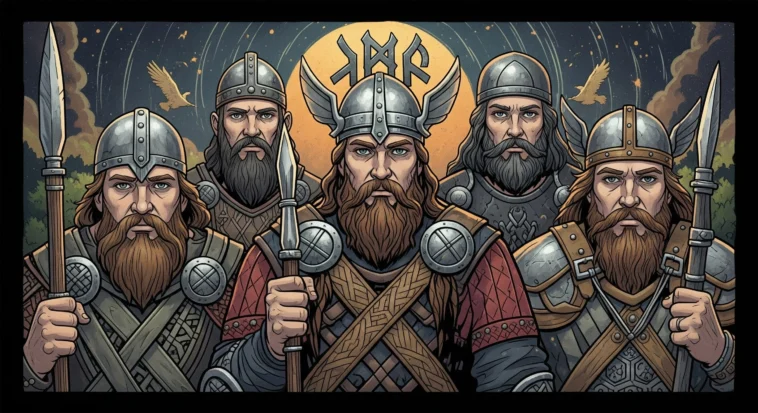
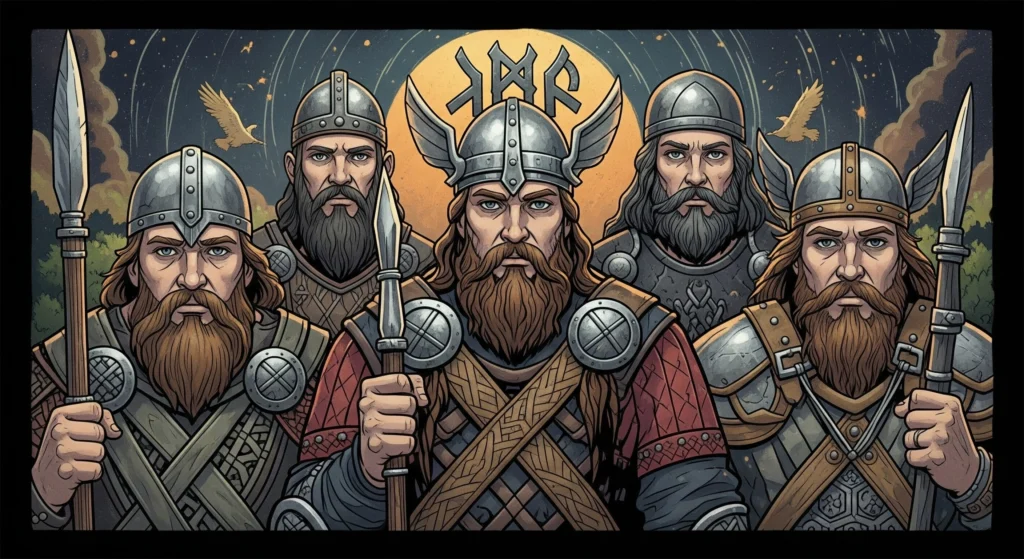
Quick myth-busting: Vikings did not wear horned helmets. That idea came from 19th-century artists who wanted them to look cooler.
Real Vikings would’ve laughed—horns are terrible in a fight.
And no, they weren’t just savage raiders. They were traders, sailors, lawmakers, poets, and explorers who crossed oceans in wooden ships.
The myths survived because the culture behind them was way more complex—and way more interesting—than the stereotypes.
Conclusion: Ancient Tales for Modern Times
Norse mythology is basically an ancient miracle—old Viking stories saved by Christian writers who knew they were too powerful to lose.
These myths aren’t just about gods punching giants; they show how people long ago understood life, fear, honor, and their place in a huge, dangerous universe.
And that’s why they still hit today. The stories wrestle with chaos, endings, courage, and responsibility—stuff we all deal with, just without hammers and monsters.
From dusty Icelandic manuscripts to movies, games, and books, these myths keep leveling up over time. The gods may fall at Ragnarök, but their stories? Yeah… those are immortal.