 Harden Elkington
The discovery of the Dead Sea Scrolls in 1947 is basically one of the coolest archaeological “plot twists” of the 20th century. These ancient manuscripts, hidden for nearly 2,000 years in the caves near Qumran, completely reshaped how we understand the Bible, ancient Judaism, and even the earliest roots of Christianity. But what do these mysterious scrolls actually prove—and why are scholars still geeking out over them decades later?

The Remarkable Discovery That Rewrote History
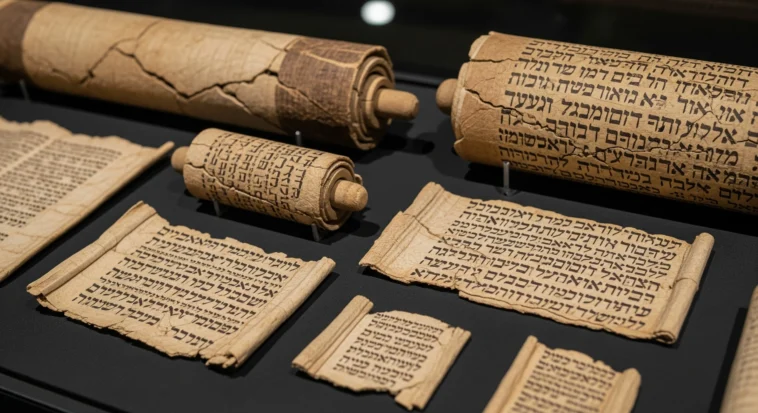
A Bedouin shepherd boy chasing a lost goat accidentally found clay jars with leather scrolls — and boom: one of the greatest archaeological treasures of the modern era. Between 1947 and 1956 archaeologists uncovered about 900 manuscripts in 11 caves, dating from the 3rd century BCE to the 1st century CE. Written mostly in Hebrew (with some Aramaic and Greek), they include Bible texts, commentaries, prayers, and community rules — basically a collection of ancient time-capsules that give you a raw, close-up look at life, religion, and politics in ancient Judea. Trust me, for anyone who loves history, it’s the kind of discovery that makes your jaw drop.
- Read Also: A Historical Journey: The Spread of Christianity in the Middle Ages
- Read Also: Judaism’s Historical Figures: A Journey Through Time
Proving the Remarkable Accuracy of Biblical Transmission
Here’s where things get wild: before the Dead Sea Scrolls, the oldest full Hebrew Bible we had was from around 1008 CE. Then suddenly—boom—we find scrolls over a thousand years older. The star of the show, the Isaiah Scroll from about 125 BCE, was compared to the medieval version… and guess what? They were almost identical. Like, imagine writing the same story for a thousand years and barely changing a comma. That’s how precise ancient scribes were.
About 95% of the biblical texts in the caves match the Masoretic Text word for word, and the remaining tiny differences are basically spelling quirks or wording swaps that don’t change the meaning. In other words, the Bible we have today looks shockingly close to what people were reading two thousand years ago — which is pretty mind-blowing, even if you’re not a history nerd.
Illuminating the World of Second Temple Judaism
The Dead Sea Scrolls basically blow up the idea that ancient Judaism was one neat, tidy religion where everyone believed the exact same thing. Nope — it was more like a huge group project where every team had a different opinion (and yes, some teams argued a lot).
Most scholars think the scrolls came from the Essenes — imagine a super strict, ultra-disciplined group who said, “You know what? We’re done with everyone’s nonsense,” and moved into the desert to live their own way. Their writings show just how seriously they took purity laws, community rules, and even end-of-the-world predictions. One of their big rulebooks, the Community Rule, reads like the ultimate ancient “How to Join Our Group” manual — complete with initiation steps and behavior expectations that would make even a school prefect pause.
Here’s what the scrolls reveal about Judaism back then:
Multiple Interpretations of Torah
Different Jewish groups read the same scriptures and came away with wildly different ideas — imagine three friends reading one text message and all thinking it means something different. That’s how lively religious debate was.
Messianic Expectations
Some texts show people were intensely waiting for a messiah — or even more than one! This helps explain why early Christians immediately connected Jesus to these prophecies.
Calendar Controversies
The Qumran community used a 364-day solar calendar, while the Jerusalem Temple followed a lunar one. It’s like when your friends celebrate a birthday on the weekend “for convenience,” but your one super-strict friend insists the actual date matters. The disagreement was that fierce.
Distinctive Theological Concepts
The scrolls talk about predestination, cosmic battles between Light and Darkness, and whole hierarchies of angels. It’s like discovering the deleted scenes of ancient Jewish theology — suddenly everything is richer, stranger, and way more interesting.
Bridging Judaism and Early Christianity
Here’s the cool part: the Dead Sea Scrolls don’t name-drop Jesus or John the Baptist, but they show that the world Jesus stepped into was already buzzing with ideas that feel super familiar to Christians today. Things like communal meals, purification baptisms, sharing possessions, and expecting God to step in any moment — the Qumran community was doing all of this before Christianity even began.
The Gospel of John especially feels like it could’ve been in a group chat with the Qumran writers. Both talk about Light vs. Darkness, Truth vs. Lies — the whole cosmic showdown vibe. When John calls believers “children of light,” he’s using language the Qumran folks were already obsessed with. So Christianity didn’t just appear out of nowhere; it grew out of ideas already swirling in Jewish thought.
And get this — some New Testament quotes that looked “wrong” compared to the standard Hebrew Bible actually match versions found in the Dead Sea Scrolls. It’s like discovering an old draft that proves your friend didn’t misquote the text message after all.
Revealing Ancient Scriptural Interpretation Methods
One of the coolest things the Dead Sea Scrolls show us is that ancient Jews were already doing deep, sophisticated Bible analysis long before the rabbis made it famous. The Qumran community wasn’t just reading scripture — they were decoding it like detectives. Their commentaries, called pesharim, treat biblical prophecies as secret messages about their own time, almost like saying, “Hey, this verse from hundreds of years ago? Yeah, that’s totally about what’s happening to us right now.”
Take the Habakkuk Commentary. Instead of reading the prophet’s words as distant history, the Qumran writers basically claimed, “Oh, he’s talking about our beef with the Jerusalem priests,” and even connected the text to the growing threat of Rome. It shows how strongly they believed the Bible held hidden clues for their daily struggles.
The scrolls also show off their next-level brainpower through things like:
Thematic Organization of Biblical Passages
They grouped verses by topic — like making a “playlist” of scriptures — to explore big ideas more clearly.
Rewritten Bible texts
These are expanded versions of biblical stories with extra details and commentary. It’s like the director’s cut of ancient scripture.
Legal Interpretations
They wrote intense discussions on how to apply God’s laws to real-life situations — the ancient version of a group debate over “what the rules really mean.”
Challenging Previous Assumptions About Hebrew Language Development
The Dead Sea Scrolls turned Hebrew studies upside down — in the best way. Because the scrolls span centuries, they show everything from classic biblical Hebrew to quirky “Qumran Hebrew,” which has its own grammar twists. This mix has helped scholars date other ancient writings more accurately and even rediscover Hebrew words that don’t appear anywhere else.
And here’s the plot twist: scholars used to think Hebrew had basically died out and Aramaic took over daily life. The scrolls proved that wrong. Hebrew was still very much alive — used for prayers, literature, and maybe even some official documents. It’s like discovering your grandparents were texting in a language you thought nobody used anymore.
Providing Archaeological Context for Biblical Events
The physical stuff found with the scrolls — pottery, coins, textiles, ruins — gives us a real-life snapshot of how people lived in ancient Judea. At Qumran, archaeologists even found ritual baths, dining rooms, and what looks like an ancient scriptorium (basically their writing studio).
Carbon dating and handwriting analysis confirmed the scrolls are genuinely from their time, shutting down early conspiracy theories. The community clearly cared about their texts: they copied them carefully, stored them in jars, and hid them away like they knew the future would need them. It’s the ancient equivalent of hitting “save” on something you absolutely cannot lose.
Ongoing Discoveries and Future Implications
Even though the Dead Sea Scrolls were first found ages ago, scientists are still uncovering new secrets from them. With high-tech imaging (basically ancient-text X-ray vision), experts can now read tiny, damaged fragments that used to look like random crumbs of paper. New digs are also turning up even more pieces in hidden caves—so the adventure definitely isn’t over. Plus, huge digital projects are putting everything online, so researchers around the world can compare and study the scrolls like one gigantic historical puzzle.
- Read Also: Renaissance Religion Facts: How Religion Ignited a New Era
- Read Also: From Reason to Revelation: Enlightenment Impact on Religion
Conclusion: A Testament to Human History and Religious Development
The Dead Sea Scrolls have completely upgraded our understanding of what early Judaism and Christianity were actually like. They show that people worked super hard to preserve sacred writings accurately across centuries—and that ancient Jewish beliefs were way more diverse and interesting than we once thought.
Instead of shaking anyone’s faith, the scrolls usually strengthen it. They reassure believers that the Bible we have today is pretty darn close to what people read thousands of years ago. And they give all of us, religious or not, a direct line to the minds of real people from 2,000 years back—people trying to answer the same big questions we still ask: Why are we here? What does life mean? What’s the truth?