 Winton Eliott
The human brain weighs just three pounds, yet it’s home to about 86 billion neurons firing away to run your entire life. Most people talk about gray matter—the “thinky” part—but here’s the twist: white matter is just as vital. It’s like the brain’s Wi-Fi, connecting all the regions so your thoughts, movements, and memories can sync up at lightning speed. Without it, your brain would be like a bunch of apps with no internet connection—smart, but useless. Understanding white matter isn’t just science geek stuff—it’s the secret to how we learn, think, and even stay us.
Understanding White Matter: The Brain’s Wiring System
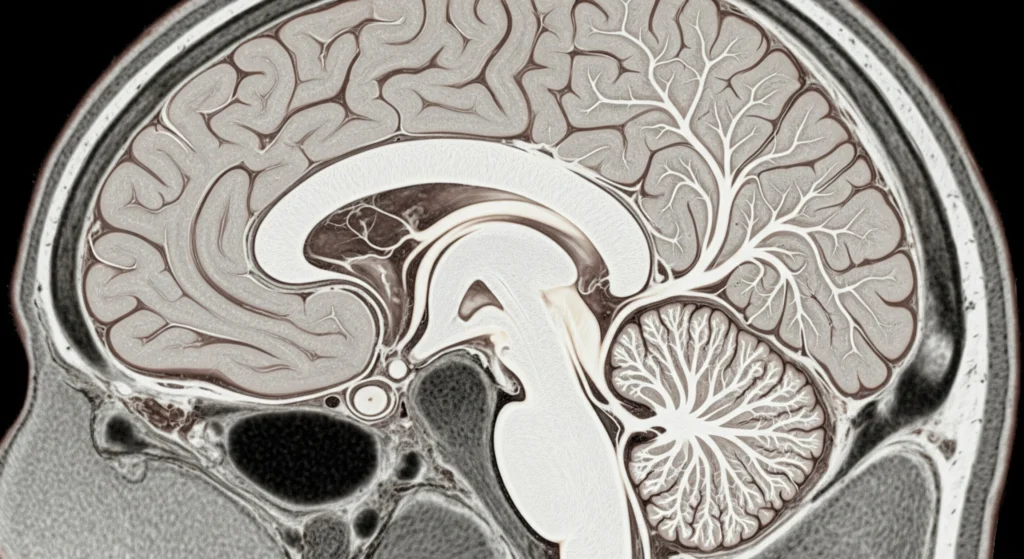
White matter gets its pale color from myelin—a fatty coating that works like the insulation on electrical wires. It’s made mostly of axons, the long cables that carry brain messages at lightning speed between regions, your spine, and the rest of your body.
If gray matter is your brain’s “processor,” white matter is the super-fast fiber-optic network linking everything together. Without it, your brain would be like a bunch of disconnected gadgets—smart but silent.
Here’s what it’s made of:
- Axons: The nerve “wires” that send signals across the brain. Some stretch for feet!
- Myelin sheaths: The insulation that keeps those signals zipping up to 200 miles per hour—basically Formula 1 for your thoughts.
- Glial cells: The maintenance crew keeping your brain’s wiring clean, fast, and healthy.
In short, white matter is what keeps your thoughts talking to each other—your brain’s version of Wi-Fi on turbo mode.
The Primary Functions of White Matter
1. High-Speed Communication Between Brain Regions
White matter is like your brain’s superhighway system—it keeps everything connected and running fast. Your brain doesn’t work as separate islands; it’s one giant, buzzing network. White matter is the wiring that lets all the parts talk to each other in milliseconds.
It links the left and right halves of your brain through the corpus callosum (the brain’s “main bridge”), connects the frontal lobes (your planning and decision center) with other regions, and ties together sensory and motor areas so you can instantly react when something happens—like catching a ball flying toward your face.
Scientists have found in Neuron that the healthier your white matter connections are, the faster your brain can communicate. Think of it like upgrading your brain’s Wi-Fi—stronger signal, smoother thinking, zero lag.
2. Supporting Cognitive Function and Learning
Here’s where it gets exciting: white matter actually grows and changes when you learn new things! Imagine you start juggling or pick up guitar lessons—your brain’s wiring literally upgrades. A study in Science showed that learning new skills increases white matter volume in related brain areas. That’s neuroplasticity in action—your brain’s way of saying, “New challenge? No problem, I’ll rewire for it.”
DTI brain scans also reveal that people with strong, organized white matter tend to think faster and learn quicker. It’s like having a better processor in your brain’s computer—you still need to study, but your uploads (and test answers) arrive faster!
3. Coordinating Motor Functions
White matter is your brain’s personal dance instructor—it coordinates every move you make, from walking to texting to nailing that perfect guitar riff. The corticospinal tract, one of the brain’s major white matter highways, carries instructions from your motor cortex to your muscles in milliseconds.
Ever catch a falling phone midair without thinking? That’s white matter magic. It’s constantly syncing your thoughts and movements so smoothly you barely notice. When it’s damaged, people can experience weakness or loss of coordination—proof that your brain’s wiring system is what keeps life moving in rhythm.
4. Processing Sensory Information
White matter also helps you feel the world—literally. It’s the courier system delivering messages from your eyes, ears, skin, and tongue to the parts of your brain that interpret them.
Picture this: you touch a hot pan by mistake. Instantly, white matter pathways send a “danger!” signal to your brain, which fires back a “move your hand!” command—all before you can say “ouch.” That’s white matter saving you from blisters. It keeps your senses and reflexes fast, sharp, and in sync.
5. Regulating Emotions and Behavior
White matter isn’t just about thinking and moving—it’s deeply tied to how you feel. It connects your prefrontal cortex (the logic-and-control center) with your limbic system (your emotional core). This link helps you stay calm when you’re angry, think before reacting, or refocus when distracted.
Research in Biological Psychiatry shows that when these connections weaken, emotional regulation can falter—leading to mood issues like anxiety or depression.
White Matter Development Across the Lifespan
White matter takes its time growing up—it’s the brain’s late bloomer. While gray matter (the “thinking” part) peaks in childhood, white matter keeps maturing well into your 20s and even 30s.
Research from the Proceedings of the National Academy of Sciences shows that different white matter tracts develop at different speeds, which is why your brain keeps getting better at things like multitasking, problem-solving, and staying focused as you grow.
Here’s the catch: those white matter connections in your prefrontal cortex—the part that helps you think before you act—are still under construction during your teen years. So when you make a snap decision or say something you instantly regret… yeah, blame the unfinished wiring.
As we get older (around our 40s and beyond), white matter slowly starts to wear down, leading to slower thinking and reaction times. But the good news? Exercise, learning new things, and hanging out with people you like can help keep your brain’s wiring strong for decades.
White Matter Disorders and Clinical Significance
If you think white matter is just boring wiring, think again – when it breaks, the effects can be dramatic. Lots of neurological and psychiatric conditions involve problems with white matter, and understanding those problems helps doctors treat – and sometimes prevent – real suffering.
Multiple Sclerosis
So, here’s the deal—your immune system just straight-up loses the plot and starts munching on myelin, which is basically the protective coating keeping your brain’s wiring from sparking out. Suddenly, outta nowhere, boom: you’re wiped, your arms feel like overcooked spaghetti, your eyeballs go all pixelated, and your brain’s basically buffering like bad Wi-Fi. It’s like you’re trying to send a juicy text and your phone totally bails, but instead, it’s your nerves throwing a tantrum. Wild, right?
Leukodystrophies
Rare genetic screw-ups mess with how your body makes or takes care of myelin, so the brain’s connections just keep getting worse. Imagine an app that never gets updates, starts lagging, and eventually just faceplants every time you try to use it—except, yeah, it’s your brain losing its grip. Not pretty.
White Matter Lesions
These are damaged spots you often see on scans of older brains. They’re linked to higher risk of stroke, memory trouble, and dementia—small roadblocks that pile up and slow traffic in your brain’s network.
Research in JAMA Neurology shows that even people who look healthy can have these “bright spots” on MRI, and they’re often tied to subtle thinking changes.
Beyond those, white matter differences show up in psychiatric and developmental conditions like schizophrenia, autism, ADHD, and dyslexia. That’s shifted how scientists think about these disorders—less about one broken “processor” and more about the connections that let different parts of the brain teamwork (or fail to).
Protecting and Maintaining White Matter Health
Given white matter’s huge job wiring your brain, keeping it healthy is basically like looking after the cables that make your whole life run smoother. Here’s how to protect those cables — explained like I’m talking to a clever 15-year-old who wants their brain to age like a vintage sneaker, not a busted charger.
Regular Physical Exercise
Think of exercise as tune-ups for your brain’s wiring. Aerobic activities (running, cycling, dancing — whatever gets you breathless and laughing) are linked to bigger, healthier white matter in studies published in Neurobiology of Aging. It’s like giving your brain better insulation and faster internet speed.
Cardiovascular Health
White matter hates bad circulation. Keep your blood pressure, cholesterol, and blood sugar in check — that’s the plumbing for your brain. If the pipes clog, the wiring gets crusty; if you keep them clean, messages zip along like delivery drones.
Cognitive Engagement
Learn weird stuff. Juggle, study a language, play an instrument, or solve puzzles — your brain literally rewires itself when you challenge it. Treat learning like a game that adds new power-ups to your internal network.
Quality Sleep
Sleep is when the brain does its cleaning and repair. Good sleep helps preserve myelin and clears metabolic junk from white matter. Skimp on sleep and you’re basically leaving gunk in the wires — not great for performance.
Avoiding Head Injuries
Concussions and blows to the head can trash white matter. Wear helmets, use seatbelts, and don’t be the person who shows off on a dangerous trick. Protect the hardware — it’s not replaceable.
The Future of White Matter Research
The study of white matter is entering a seriously cool era. Thanks to brain-mapping technology like diffusion tensor imaging (DTI), scientists can now trace your brain’s wiring in stunning detail—kind of like Google Maps, but for neurons. These brain maps, called connectomes, show how every region links up, making the invisible communication network of your mind visible for the first time.
Here’s where it gets exciting:
- Personalized medicine: Doctors might soon tailor treatments based on your unique brain wiring—like custom settings for your mental operating system.
- Early disease detection: Tiny changes in white matter could one day warn doctors about brain diseases before symptoms even show up.
- Targeted brain repair: Imagine therapies designed to heal or strengthen your white matter, keeping your mental “Wi-Fi” strong.
- Learning rewired: Scientists are discovering that every new skill—whether it’s coding, sketching, or skateboarding—literally reshapes your white matter network.
Research in Nature Neuroscience even hints that future treatments could rebuild myelin, the insulation around neurons. That means we might one day repair the brain’s wiring in conditions like multiple sclerosis or even slow down cognitive aging.
Conclusion: The Indispensable Role of White Matter
White matter isn’t just brain “wiring” — it’s the high-speed network that keeps every part of your mind talking smoothly. It helps you think fast, move gracefully, feel deeply, and learn constantly. It’s the reason you can text, laugh, and catch a ball all in the same moment without short-circuiting.
Far from being background noise, white matter is alive and adaptable. It learns with you, grows with you, and even ages with you. Scientists now know it’s just as vital as gray matter — maybe even the real unsung hero of your brain.