
 Harden Elkington
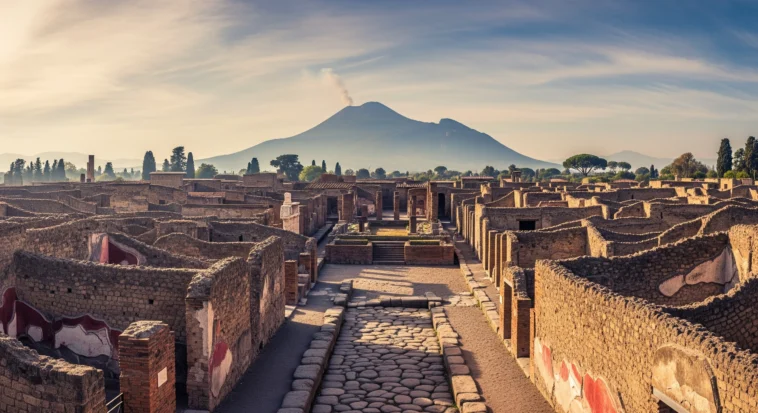
The story of Pompeii’s rediscovery is like a real-life mystery movie—buried secrets, accidental clues, and a city frozen in time. Pompeii was destroyed in one terrifying day in 79 AD, but finding it again took centuries. Piece by piece, curious minds slowly uncovered one of the greatest snapshots of ancient Roman life ever found.
The Initial Discovery: An Architect’s Unexpected Find
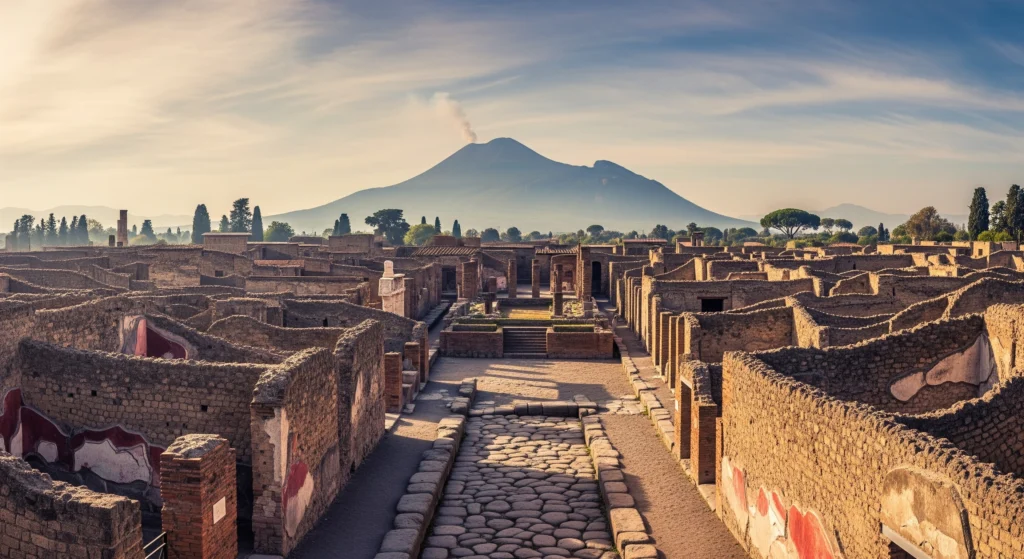
Imagine digging a tunnel and suddenly hitting ancient walls covered in paintings—talk about a plot twist. In the late 1500s, architect Domenico Fontana was building an aqueduct when he accidentally stumbled into Pompeii. Instead of shouting, “Guys, I found an ancient city!”, he stayed quiet. Why? Some of the artwork was very NSFW by Renaissance standards, and Fontana didn’t want trouble.
So Pompeii was buried twice—once by a volcano, and once by silence. Locals called the area La Civita (“the city”), knowing something was there, but not what. It would take another 150 years before the world finally realized they’d been walking over a perfectly preserved Roman city the whole time.
- Read Also: Who Discovered Greenland: Unveiling the Fascinating History
- Read Also: What Ancient Cities Are Still Undiscovered? The Hidden Treasures
The Long Sleep: Why Pompeii Remained Forgotten
Imagine a whole city being swamped by about 15 feet of ash overnight — that’s what happened on August 24–25, 79 AD. Pompeii, home to maybe 10,000–20,000 people, was frozen like a paused movie and buried for over 2,000 years. Farmers later plowed the rich volcanic soil above it without a clue, and only scattered accounts — like Pliny the Younger’s letters — hinted that something huge lay beneath.
The 18th Century: Systematic Excavation Begins
Nobody really dug Pompeii properly until 1748. An inscription in 1763 finally gave the place its name, and the work was led by Roque Joaquín de Alcubierre for the King of Naples. Sparked by earlier finds at Herculaneum (rediscovered in 1709, dug from 1738), archaeologists finally realized they’d stumbled onto a time capsule of Roman life.
Early Excavation Challenges
- Treasure-hunting mindset: early diggers wanted pretty things for royal rooms, not careful science.
- Poor records: objects were pulled out with little note of where they came from.
- Destructive methods: tunneling and rough digging wrecked walls and frescoes.
- Looting: many valuables disappeared into private collections.
Even with a few systematic studies (Karl Weber worked from 1750–1764), the first digs were more like excited kids with big shovels than careful scientists — which cost us some priceless history, but also set the stage for the careful archaeology that saved what remained.
Giuseppe Fiorelli: The Father of Modern Pompeii Archaeology
In 1860, Pompeii finally got the hero it needed. Giuseppe Fiorelli stepped in and basically said, “Okay everyone, stop looting—this is science now.” He turned chaotic digging into real archaeology and changed how the ancient city was studied forever.
Systematic Organization
Fiorelli brought order to the mess with smart, still-used ideas:
- Regional division system: He split Pompeii into numbered regions, blocks, and doorways—like giving the city a GPS so nothing got lost again.
- Top-down excavation: Instead of bulldozing streets first, he carefully dug buildings from the roof down, saving fragile walls and objects.
- Serious documentation: Everything was drawn, photographed, and recorded, because memory is bad but notebooks are forever.
The Revolutionary Plaster Cast Technique
Here’s the part that gives people goosebumps. Around 1863, Fiorelli noticed hollow spaces in the ash where bodies had decomposed. He poured plaster into them—and suddenly, people reappeared. Victims frozen mid-movement. Clothes, jewelry, even facial expressions. There’s even a cast of a chained dog still trying to escape.
These casts turned Pompeii from “cool ruins” into a deeply human story. Thanks to Fiorelli, the city doesn’t just show us how Romans lived—it shows us their very last moments, and that hits hard, even 2,000 years later.
The Birth of Modern Archaeology
Pompeii basically invented modern archaeology. Before the 1700s, people treated ancient stuff like Pokémon—grab the cool pieces and move on. Digging at Pompeii and Herculaneum changed that forever. Archaeologists realized that where something is found matters just as much as what it is. Layers told stories. Texts, buildings, and objects started talking to each other. And for the first time, discoveries weren’t just locked in palaces—they were shared with the world.
20th and 21st Century: Continued Discovery and Conservation
By 1960, about two-thirds of Pompeii was uncovered—and that’s when experts hit the brakes. Turns out, air and rain are way worse than volcanic ash. So instead of digging faster, archaeologists switched to protecting what was already exposed: stabilizing walls, restoring frescoes, and using new tech to record everything before it crumbles.
Recent Discoveries
Even with careful digging, Pompeii keeps surprising us:
- 2018: Horses found still wearing their harnesses
- 2020: An ancient fast-food joint with food still in jars (Roman takeout!)
- 2021: A jaw-dropping ceremonial chariot
- 2024: A dining hall with epic mythological frescoes
Thanks to lasers, 3D scans, and digital reconstructions, Pompeii is still giving up secrets—including proof that people came back and lived there after the eruption. Two thousand years later, the city refuses to stop telling its story—and honestly, that’s what makes it legendary.
The Significance of Pompeii’s Discovery
Pompeii isn’t just another pile of old ruins—it’s like ancient Rome hit the pause button. No other site lets us see everyday life this clearly. Instead of broken stones and guesses, Pompeii shows us exactly how people lived, worked, joked, argued, and ate almost 2,000 years ago.
What Makes Pompeii Unique
- Shockingly well preserved: Houses still stand, ovens still hold bread, and graffiti still shouts political slogans and jokes.
- Everyone’s story matters: You don’t just see rich villas—you see shops, bars, tiny apartments, and workplaces. Real people, real lives.
- Tiny human details: Love notes on walls, street insults, food remains, and tools make Romans feel weirdly familiar.
- A real Roman city: Streets, water systems, baths, and an amphitheater show how advanced and organized Roman cities were.
Visiting Pompeii Today
Today, Pompeii is a UNESCO World Heritage Site that pulls in about 2.5 million visitors a year. You can walk the same streets Romans did, stand where 20,000 fans once watched games, and see the plaster casts of people caught in the eruption. And here’s the coolest part—about a third of the city is still buried, waiting for future tech (and future minds) to uncover it. Pompeii isn’t finished teaching us yet.
- Read Also: Who Discovered Australia? The History of How Australia Discovered
- Read Also: Who Discovered Iceland? The History Of The Exotic Country
Lessons from Pompeii’s Discovery
The story of Pompeii’s discovery teaches us valuable lessons about archaeology, preservation, and our relationship with the past:
- Accidental discoveries matter: Fontana’s 16th-century find, though not immediately pursued, planted the seed that eventually led to systematic excavation
- Methodology evolves: The transition from treasure hunting to scientific archaeology represents a maturation in how we value and study cultural heritage
- Preservation is ongoing: Excavation is not the end goal—protecting what we’ve found for future generations is equally important
- Technology transforms understanding: Modern techniques continue to reveal new information from sites excavated centuries ago
- Context is crucial: The location and relationship between artifacts matter as much as the objects themselves
Conclusion
So… when was Pompeii discovered? Honestly, it depends. You could say 1592, when an architect accidentally hit ancient walls. Or 1748, when people finally started digging properly. But here’s the cool truth: Pompeii is still being discovered today, every time new tech or fresh eyes reveal something hidden.
Pompeii isn’t just a win for archaeology—it changed the rules. It taught us how to study the past carefully, not like treasure hunters but like detectives. From a случай accident to plaster casts, lasers, and 3D scans, Pompeii proves that history doesn’t disappear. It waits. And as long as we keep asking questions, this buried city will keep answering them—for centuries to come.