 Harden Elkington
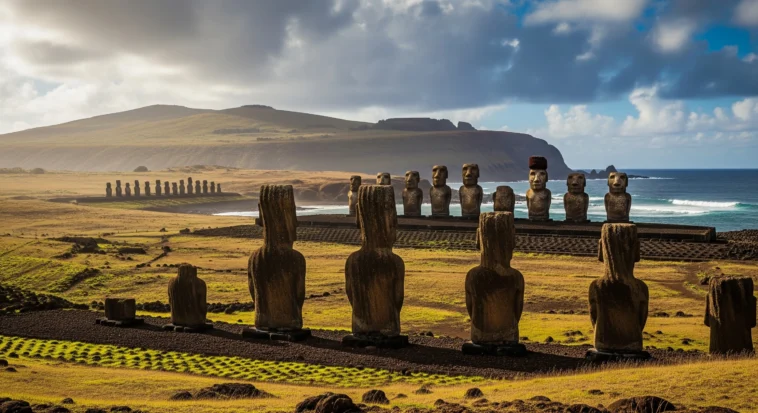
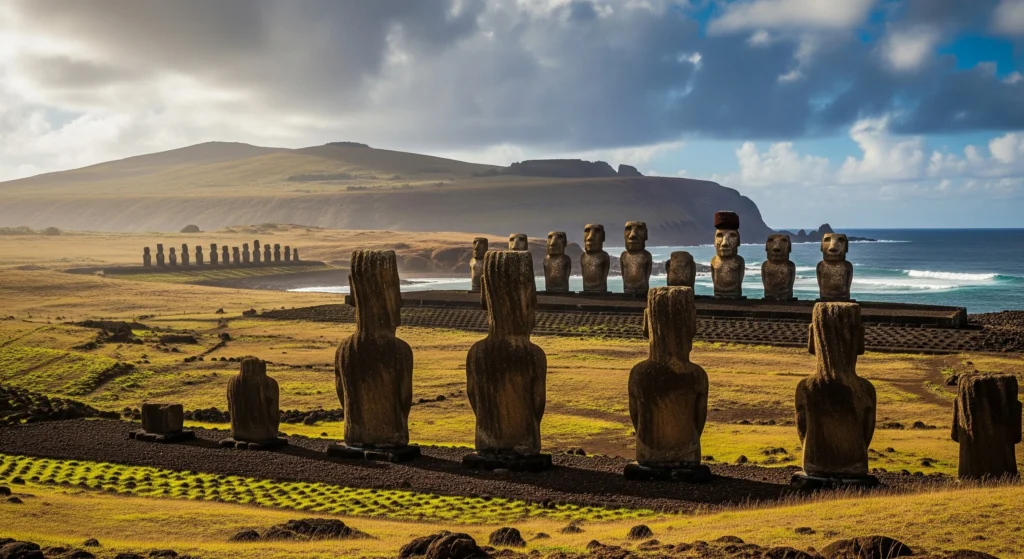
The story of Easter Island has captivated historians, archaeologists, and the public imagination for centuries. This tiny dot in the Pacific—Rapa Nui—has long been a dramatic example of how a brilliant civilization can rise and then collapse. Its giant moai statues, staring out like ancient celebrities, are the most iconic leftovers of a culture that once thrived. But here’s the twist: the real story of what happened to the people of Easter Island isn’t some simple “they ruined their environment” tale. Modern research shows it’s a much richer, messier, and way more human story than we were ever taught.
The Traditional Narrative: A Warning About Ecological Collapse
For years, people have repeated a dramatic version of Easter Island’s history—basically, the ultimate “don’t trash your planet” story. According to this tale, the first Polynesians arrived around 1200 CE and found a lush island full of palm trees. Life was good… until everyone got super obsessed with carving giant stone statues and showing off. Imagine your entire community competing over who can build the biggest, coolest moai—it was like an ancient version of trying to have the most followers.
The story claims they chopped down every last tree to move those statues. No trees meant no canoes, no proper farming, and no way to stop the soil from washing away. With food running out, things supposedly got messy—fights, collapse, even cannibalism. So when Europeans showed up in 1722, they found a struggling population on a nearly barren island.
This version became famous thanks to books like Jared Diamond’s Collapse, which basically used Easter Island as the world’s ultimate “eco-fail” warning sign.
- Read Also: The Rise of The West: The Development of Western Civilization
- Read Also: A Lost Civilization: Rise and Fall of The Indus Valley Civilization
The Problem with Simple Stories
As dramatic as the classic Easter Island story sounds, modern research shows it’s way too simplified—kind of like when someone blames a whole group project on one kid when actually everyone messed up. Archaeologists and anthropologists have uncovered evidence that flips many parts of the ecocide tale on its head: the timing of deforestation, why the population dropped, and even how the people lived.
What’s becoming clear is this: the Rapa Nui weren’t clueless tree-choppers who destroyed themselves. They were resourceful, tough, and surprisingly smart at adapting to a tough environment. And here’s the plot twist—outside forces, not just environmental choices, had a massive impact on their decline. The real story is way messier, but also way more human.
What the Evidence Actually Shows
Deforestation
Yes, Easter Island lost its forests—but not in one giant “whoops, we cut everything down!” moment. It happened slowly, over centuries. Scientists looked at pollen and charcoal in the soil (basically ancient island receipts) and found a long, messy process. And get this: rats—yep, furry little stowaways—chewed up palm seeds so badly that new trees couldn’t grow. Climate shifts like the Little Ice Age also stressed the forests. So humans weren’t the only culprits; it was more like a tag-team of nature and hungry rodents.
The Moai
The idea that the Rapa Nui chopped down every tree to drag giant statues around? Modern tests show the statues could be “walked” upright using ropes—literally rocked down the road like huge stone penguins. Hardly any wood needed. And those moai weren’t pointless flexes; they probably marked fresh water and key resources, helping organize the community. Think of them as giant ancient signposts, not ego monuments.
Population Dynamics
Older stories claimed the island had 15,000 people who suddenly crashed into chaos and cannibalism. But newer evidence shows the population was more like 3,000–4,000—and pretty stable. People adapted to the environment, kept farming, and even continued building moai during tough times. In other words, they weren’t spiraling into disaster before Europeans arrived; they were managing just fine.
The Real Culprit: European Contact and Its Devastating Consequences
When you zoom out, the real tragedy of Easter Island isn’t what the Rapa Nui did to themselves—it’s what happened after Europeans showed up.
Disease
When Europeans landed in 1722, they brought diseases the islanders had zero immunity to. Imagine your entire school catching a new illness at once—but worse. Within decades, up to 75% of the population was gone. The people didn’t stand a chance.
The Peruvian Slave Raids
Then came one of the darkest chapters: in 1862–63, Peruvian slave raiders kidnapped around 1,500 Rapa Nui—half the island. They took leaders, priests, and the experts who kept their writing system and traditions alive. Only 15 survived long enough to be sent back, and they accidentally carried smallpox home, causing even more devastation. It was like losing both the people and the memory of the entire culture.
Colonialism and Cultural Destruction
After the raids, things only got harder. Missionaries suppressed old traditions, and by 1888 Chile took control of the island. Most of the land was turned into a giant sheep ranch, and the Rapa Nui were forced into a tiny settlement. Their culture, population, and way of life were dismantled—not by environmental choices, but by outside powers.
Lessons for Today: Beyond the Simplistic Parable
Resilience and Adaptation Matter:
The Rapa Nui weren’t helpless—they were innovators. They farmed with rock gardens, managed water smartly, and kept their society running for centuries on one of the most isolated islands on Earth. That’s hardcore survival skills.
External Shocks Can Overwhelm Even Resilient Societies:
But even the toughest community can’t prepare for everything. When disease, slave raids, and colonialism hit, it was like getting slammed by wave after wave with no chance to recover. Their downfall wasn’t because they mismanaged their world—it’s because the outside world crashed into theirs.
Complexity Over Simplicity:
History is messy. It’s never just one cause. Environment, population, technology, culture, and outsiders all mix together like a giant pot of chaos stew.
Be Cautious of Convenient Parables:
The old “Easter Island destroyed itself” story stuck around because it made a neat environmental lesson. But neat doesn’t mean true. Real history deserves more respect than simplified scare stories.
- Read Also: Explore Ancient Civilizations and Their Mysterious Technologies
- Read Also: 9 Ancient Civilizations That Disappeared Without trace
Conclusion: Rewriting the Legacy of Rapa Nui
The fall of Easter Island wasn’t some dramatic case of “people ruining their own home.” It was a heartbreaking mix of disease, slave raids, and colonial oppression—disasters the Rapa Nui never had a fair chance to fight. And the wild part? They were actually managing their environment impressively well before outsiders arrived.