
 Harden Elkington
The art world used to be a total boys’ club. For centuries, women were told—sometimes politely, sometimes brutally—that art wasn’t “for them.”
They weren’t allowed into top art schools, their work wasn’t shown in museums, and history books conveniently forgot they ever existed. But in the late 1960s and early 1970s, women artists had had enough.
They didn’t just make cool art—they used it like a megaphone to shout, “We’re here, and we matter.” Feminist art wasn’t about decoration; it was about flipping the table and changing the rules.
The Revolutionary Context: Why Feminist Art Emerged
Here’s how bad it was: in 1972, women made up less than 5% of artists in major U.S. museum collections. That’s not a typo.
Art historian Linda Nochlin famously asked, “Why have there been no great women artists?” Her answer? Because the system was rigged. Women weren’t untalented—they were locked out.
At the same time, the world was already on fire (in a good way). Feminism, civil rights, and youth movements were challenging authority everywhere.
Women artists started meeting, sharing stories, opening their own galleries, and demanding space. They realized art didn’t have to be “neutral” or polite.
It could protest, teach, and empower. And once they figured that out? There was no going back.
- Read Also: Legendary Women: 5 Famous Women of the Middle Ages
- Read Also: Pioneers and Visionaries: 8 Great Women of Ancient Persia
Judy Chicago
If feminist art had a mic-drop moment, Judy Chicago’s The Dinner Party was it. Imagine walking into a museum and seeing a huge triangular dinner table with 39 seats—each one saved for a woman history tried to forget.
Ancient goddesses, writers, artists like Georgia O’Keeffe—everyone finally gets a nameplate. And here’s the twist: the plates use embroidery, ceramics, and needlework—the stuff people used to sneer at as “just crafts.”
Chicago basically said, Oh, this isn’t real art? Watch me put it in a museum.
She also didn’t shy away from controversy. The plates featured vulva-inspired designs (yes, that kind of bold), forcing people to confront how uncomfortable the art world was with women’s bodies and sexuality.
Over a million people came to see it. Some critics rolled their eyes. Others cheered. Either way, nobody could ignore it.
Bonus plot twist: more than 400 volunteers helped make it, smashing the lonely “male genius” stereotype.
And Chicago didn’t stop there. She helped launch the first Feminist Art Program, creating a space where women artists could finally experiment, speak freely, and grow without being talked over.
Miriam Schapiro
Miriam Schapiro was like, You hate decoration? Cool. I’ll make it gigantic. She worked alongside Judy Chicago but carved out her own vibe with something she called “femmage”—collages made from fabric, lace, ribbons, and other materials tied to women’s domestic lives.
Stuff critics used to dismiss as “cute” or “girly.”
Her art was loud, colorful, and unapologetic. One of her most famous works, Anatomy of a Kimono, stretched over 52 feet long.
That’s not subtle—that’s demanding attention. She proved that quilts, fabric, and decorative patterns could be powerful, serious, and smart.
Schapiro didn’t just make art; she gave artists language. Her ideas helped women stop trying to fit into male-made art rules and start building their own.
Basically, she told women artists: Your experiences matter—and they look amazing on a massive canvas.
The Guerrilla Girls
Picture this: a bunch of women artists wearing gorilla masks, sneaking humor and hard facts into the art world like a prank with a purpose. That’s the Guerrilla Girls.
Starting in 1985, they went after museums and galleries that kept saying, “We’re totally fair,” while mostly showing work by white men.
Their most famous poster asked a savage question: “Do women have to be naked to get into the Met Museum?” The answer was… kind of, yeah.
Fewer than 5% of the artists were women, but 85% of the naked bodies on the walls were female. Oof. By putting this on buses and billboards, they forced everyone—museum lovers included—to confront the hypocrisy.
They used bright graphics, jokes, and stats like weapons. By staying anonymous, they made it about the message, not fame—and avoided getting blacklisted. And it worked. Museums slowly started changing, and activist art was never the same again.
Carolee Schneemann
Carolee Schneemann didn’t tiptoe around discomfort—she sprinted straight into it. In her 1975 performance Interior Scroll, she stood naked and pulled a written scroll from her own body, then read it aloud. Yes, it shocked people. That was the point.
She was saying: women’s bodies aren’t objects for others to stare at—they’re sources of ideas, power, and meaning.
She tackled topics people didn’t want to touch: female sexuality, pleasure, blood, and physical experience. Critics called her work “obscene.” She called it honest.
By refusing to separate the mind from the body, Schneemann changed performance art forever.
She proved that personal experiences—especially women’s—could be bold, political, and unforgettable. And after her? Artists knew they didn’t have to ask permission to tell the truth.
Faith Ringgold
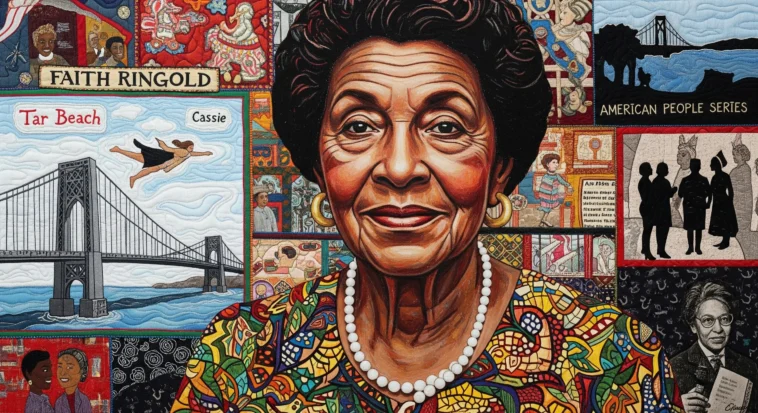
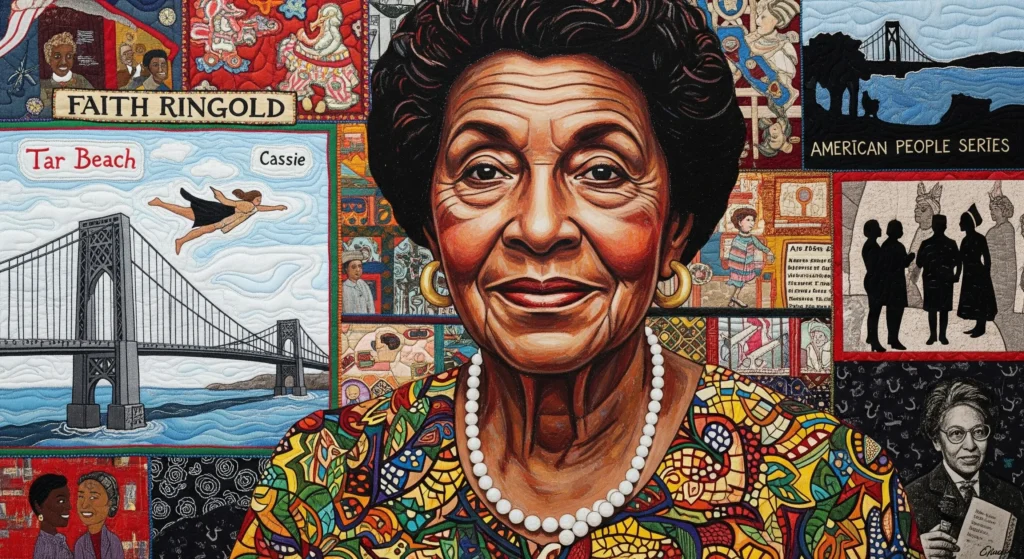
Faith Ringgold didn’t just ask, “Where are the women?”—she asked, “Where are the Black women?” And then she put them front and center. She mixed painting with quilting, a tradition deeply rooted in Black communities, to tell stories museums were ignoring.
Her story quilts read like visual novels—bold images plus handwritten text—about racism, sexism, family, and survival.
Works like Who’s Afraid of Aunt Jemima? flipped racist stereotypes on their heads and gave Black women complex, powerful voices. Ringgold proved that feminism isn’t one-size-fits-all.
Race, gender, and class collide in real life, so art has to deal with all of it. And she didn’t stop at galleries—her children’s book Tar Beach brought these ideas straight to kids, basically saying: art and justice are for everyone, not just fancy museums.
Ana Mendieta
Ana Mendieta’s art feels quiet, emotional—and then suddenly hits you in the chest. After being sent from Cuba to the U.S. as a child, she made work about loss, belonging, and the body.
In her Silueta Series, she shaped outlines of her body in dirt, sand, flowers, even fire—then let nature erase them.
It’s beautiful, haunting, and a little scary on purpose. Her work connects women’s bodies to the land, history, and violence—especially the kinds no one wants to talk about.
She didn’t care about white gallery walls; she went into forests, fields, and rivers to make art that felt spiritual and raw.
Mendieta died young, which makes her work hit even harder. But her message lives on: identity, memory, and place matter—and sometimes the most powerful art disappears, but never really goes away.
The Lasting Impact: How Feminist Art Pioneers Changed Everything
These artists didn’t just make art—they rewired the system. Before them, women in art were mostly muses, not makers.
Feminist artists kicked that door open and said, our stories, bodies, and lives belong on these walls too. They challenged museums, rewrote art history, and proved that art could fight back.
They also broke the “art rules.” Quilts, embroidery, ceramics—stuff people used to dismiss as “hobbies”—suddenly became powerful, museum-worthy statements.
By doing that, they smashed the fake wall between “real art” and “women’s work.” Today’s art world—messy, political, mixed-media—exists because they dared to expand what art could be.
They didn’t wait for permission, either. They built their own galleries, schools, and communities where women could grow without being shut down.
A lot of how art is taught and shown today comes straight from those feminist spaces.
Contemporary Relevance
Here’s the wild part: this fight isn’t over. Even now, women—especially women of color—are still underrepresented in major museums. That’s why feminist art still matters a lot.
Modern artists like Kara Walker and Jenny Holzer are using the same tools: protest, performance, craft, and straight-up calling out powerful institutions.
Movements like #MeToo have made feminist art feel urgent again, and social media has turned activism into something fast, loud, and impossible to ignore—very Guerrilla Girls energy.
Today’s feminist art is also more inclusive, tackling how gender connects to race, class, disability, and sexuality. That idea didn’t come out of nowhere—it was built by artists like Faith Ringgold who said, justice has to work for everyone.
- Read Also: From Artists to Rulers: 8 Famous Renaissance Women
- Read Also: Women in History: 8 Most Influential Women in the Age of Empire
Conclusion: Honoring the Revolution
These feminist art pioneers didn’t play it safe. They were mocked, censored, and pushed aside—but they kept going. And because of them, the art world is bigger, braver, and way more honest.
Their work reminds us that art isn’t just about beauty—it’s about power.
Who gets seen? Who gets heard? Who gets remembered? By learning their stories, we’re not just studying art history—we’re learning how creativity can challenge injustice and actually change the world. And honestly? That’s pretty revolutionary.