 Winton Eliott
The human brain weighs about three pounds—but don’t let that fool you. Inside that squishy little powerhouse is a level of complexity that still blows scientists’ minds.
One of its coolest features is a set of deep grooves called cerebral fissures.
Think of them like natural borders on a map, helping organize everything from how you move to how you remember your favorite song.
What Is a Cerebral Fissure?
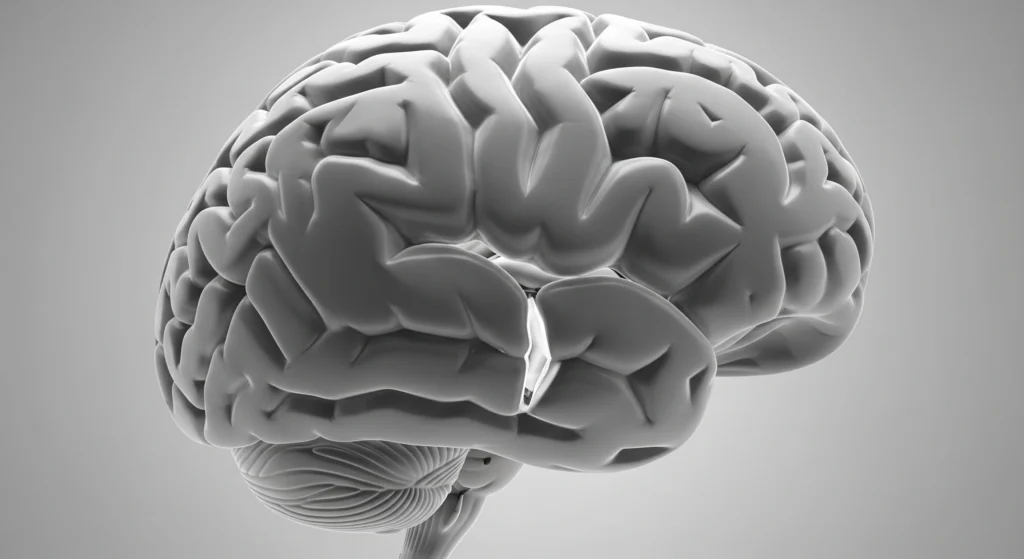
A cerebral fissure is a deep groove in the brain that separates major regions of the cerebral cortex.
If the brain were a city, fissures would be the big highways dividing neighborhoods.
They’re deeper than the smaller wrinkles (called sulci) and help doctors and scientists know exactly where they are when studying or operating on the brain.
These grooves aren’t random—they’re the result of millions of years of evolution, carefully shaping how we think, learn, and survive. Pretty amazing for something hiding inside your head, right?
The Major Fissures of the Cerebrum
The Longitudinal Fissure
This is the brain’s biggest split—the dramatic line down the middle that separates your brain into left and right halves.
Think of it like a friendship breakup… except the two sides still talk nonstop through a bridge called the corpus callosum.
The left side is usually better at language and logic, the right side at creativity and emotions—but here’s the twist: they constantly work together. Your brain is less “left vs right” and more “team effort.”
The Lateral Fissure (Sylvian Fissure)
This fissure is like a secret passage on the side of the brain. It separates the thinking and planning areas from the memory and sound-processing areas.
Hidden deep inside it is the insula, a mysterious part of the brain linked to feelings, self-awareness, and consciousness—basically, the “inner vibe checker.”
Doctors pay close attention to this fissure because a major blood vessel runs along it, and problems here can seriously affect speech and movement.
The Central Fissure (Fissure of Rolando)
If your brain had a control line, this would be it. The central fissure separates the part that moves your body from the part that feels your body.
One side says, “Move your hand,” and the other says, “Hey, that’s hot!” Damage here can mess with movement or sensation, which is why neuroscientists treat this fissure like sacred ground.
The Parieto-Occipital Fissure
This fissure marks the brain’s shift from seeing to understanding what you see. It separates visual processing from areas that help you make sense of space and surroundings.
In simple terms: this is where raw images turn into “Oh, that’s a car coming toward me.” Super important for not walking into walls—or traffic.
The Clinical Significance of Cerebral Fissures
Neurological Diagnosis and Imaging
When doctors look at brain scans, cerebral fissures are like GPS coordinates.
Radiologists use them to say, “The problem is right here,” instead of waving vaguely at a scan.
Because everyone learns the same landmarks, doctors can instantly understand each other—kind of like gamers calling out exact map locations during a match.
Neurosurgical Planning
For brain surgeons, fissures are lifesavers—literally. They often use these natural gaps as safe pathways to reach deep parts of the brain without damaging important areas.
Modern surgery even uses 3D brain maps that highlight fissures, helping surgeons move with surgeon-level precision instead of “hope-for-the-best” guessing.
Understanding Stroke Patterns
Big blood vessels run along these fissures, so when a stroke happens, the damage follows predictable patterns.
Doctors can look at the location and quickly guess what might be affected—movement, feeling, or speech. It’s like knowing which room lost power based on which circuit flipped.
Developmental Aspects of Cerebral Fissures
Fetal Brain Development
Believe it or not, the brain starts out smooth, like a tiny stress ball. As a baby grows in the womb, deep grooves slowly form.
The first big one—the longitudinal fissure—splits the brain into left and right halves.
Later, other major fissures show up, especially during the second trimester.
Doctors actually track these grooves on ultrasounds because their timing tells a big story about whether the brain is developing normally.
Abnormalities in Fissure Development
When fissures don’t form the way they should, serious problems can happen.
In lissencephaly, the brain stays too smooth, which leads to major learning and movement challenges.
On the flip side, polymicrogyria causes too many folds—like over-wrinkling a shirt—which can also disrupt how the brain works.
These conditions prove something wild: the brain’s grooves aren’t decoration—they’re essential for thinking, moving, and living.
Research and Future Directions
Individual Variation in Brain Anatomy
Here’s the cool part: no two brains are exactly the same. Even though everyone has the same major fissures, their shapes and patterns vary—kind of like fingerprints.
Scientists are now using AI to scan thousands of brains to see if these differences connect to things like learning style, personality, or risk of certain brain disorders.
One day, your brain’s unique layout might help personalize how you learn or how doctors treat you.
Neuroplasticity and Fissure-Adjacent Regions
The brain is shockingly flexible.
Research shows that areas near major fissures can step up and take over jobs when other parts get damaged—like a backup player jumping into the game.
This discovery is huge for helping people recover after strokes or brain injuries and proves something powerful: your brain isn’t fixed—it’s always ready to adapt.
Practical Implications for Brain Health
Protecting Your Brain’s Architecture
You can’t reshape your brain’s grooves—but you can protect what they support.
Exercise, sleep, good food, learning new things, and hanging out with people all help keep your brain sharp.
Fun fact: your heart health affects your brain too. Those blood vessels running along brain fissures need good blood flow, so taking care of things like blood pressure and sugar levels really matters.
Education and Awareness
Knowing even basic brain anatomy gives you power. It helps you take brain injuries seriously, notice warning signs, and appreciate just how wild and fragile this organ is.
Once you understand your brain, you’re way less likely to take it for granted.
Conclusion
Cerebral fissures aren’t just lines and cracks—they’re the brain’s master blueprint, shaped by millions of years of evolution.
They help us move, feel, think, speak, and even recover after injury.
Scientists are still discovering how flexible and unique these structures are, and every new finding makes the brain even more mind-blowing.
Whether you’re just starting to explore neuroscience or you’re simply curious, understanding cerebral fissures is like learning the floor plan of the most powerful machine in the universe—your brain. And trust me, it’s worth knowing.