
 Harden Elkington
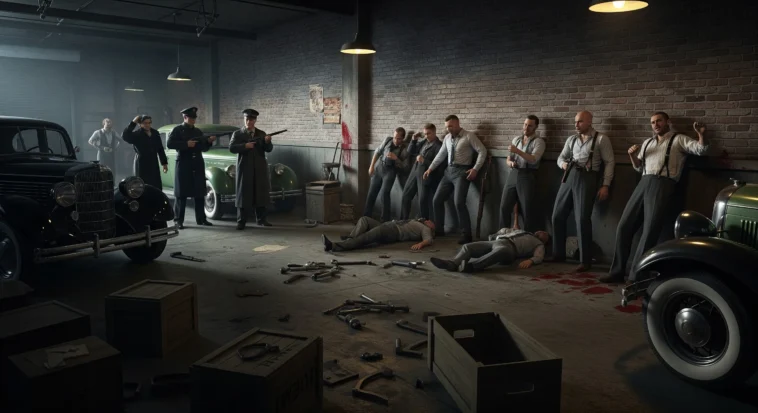
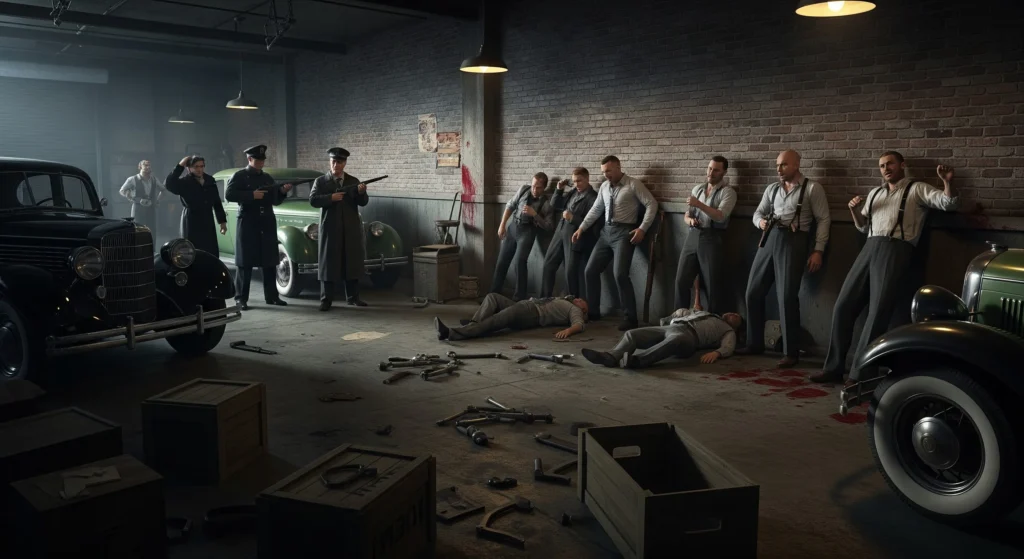
On a frigid Chicago morning in 1929, seven men were lined up against a garage wall and killed in what became the Saint Valentine’s Day Massacre — the single most shocking mob hit in U.S. history.
This wasn’t a random brawl; it was a cold, calculated hit that exposed how ugly and organized the bootlegging business had become, and it forced police to face a whole new level of gangster violence.
The Rise of Chicago’s Criminal Empires
Think Prohibition turned normal people into sneaky party planners — but it turned gangsters into billion-dollar bosses.
When alcohol was banned in 1920, a huge illegal market exploded, and Chicago — with its rail lines and crooked officials — became the main stage.
The city’s underground liquor trade pulled in about $60 million a year, and two big crews ran it: Al Capone’s South Side syndicate and George “Bugs” Moran’s North Side Gang.
The Brewing Conflict
Capone and Moran weren’t just thugs fighting over turf — they were ruthless rivals in a deadly business war.
Years of attempts on each other’s lives, territory fights, and escalating violence made the city a powder keg. These men ran organized, almost corporate operations with cash, muscle, and weapons — and the massacre was the brutal, terrifying climax of that power struggle.
- Read Also: A Look Back in Time: The Most Impactful American History Events
- Read Also: Beyond Conspiracies: 7 Assassination of Historical Figures
The Day That Shook America
February 14, 1929 started like a normal freezing Chicago morning — just another day at a sketchy warehouse that secretly ran bootlegging deals.
A few of Bugs Moran’s guys were inside, waiting for a whiskey shipment, probably bored and freezing and thinking nothing crazy would happen.
Then a black Cadillac pulls up. Five men get out — two dressed like cops.
Everyone inside thinks, “Ugh, police raid,” and just… cooperates. No panic. No fighting. They line up like obedient kids in a school hallway. That mistake cost them their lives.
The Execution
This part is straight-up nightmare fuel. The fake “cops” order the men to face the wall — then unleash hell.
Thompson machine guns. Shotguns. Over 70 bullets. It wasn’t chaos — it was fast, planned, and terrifyingly efficient.
Seven people died:
- Five North Side Gang members
- One random guy who liked hanging around gangsters
- One mechanic who was literally just doing his job
And here’s the wild twist: the main target, Bugs Moran, didn’t even show up. He was late. He saw what he thought was a police raid and dipped. Wrong place, wrong time saved his life.
One man, Frank Gusenberg, somehow survived long enough to reach the hospital — with 14 bullet wounds. When police asked who shot him, he said:
“Nobody shot me.” Then he died. That’s gangster code, loyalty to the grave.
This wasn’t just a shooting — it was a message. A power move. A brutal reminder that in Prohibition-era Chicago, crime wasn’t messy chaos… it was organized, strategic, and absolutely ruthless.
The Investigation and Public Outcry
This massacre didn’t just scare Chicago — it freaked out the whole country. Newspapers went wild.
People who used to think gangsters were “cool rebels” suddenly realized: nope, these are straight-up killers. The fantasy version of mobsters died that day.
America stopped glamorizing them and started fearing them — and honestly, for good reason.
The Police Response
Here’s the frustrating part: no one was ever convicted. Everyone knew Capone was behind it — everyone — but he had a perfect alibi in Florida. Classic mob boss move. Untouchable.
Police suspected:
- Jack “Machine Gun” McGurn (Capone’s enforcer)
- Fred “Killer” Burke (linked to the murder guns later)
- Even hired hitters from Detroit’s Purple Gang
They found the weapons. They had names. They had theories.
But no convictions. No justice. No courtroom showdown.
The case is still officially unsolved, which makes it even creepier — like a true crime story that never got its ending.
And that’s what really shook America: not just the violence… but how powerful criminals had become.
The Lasting Impact on American Law Enforcement
This massacre basically told the government: “Yeah… you’re not ready for this.”
Local cops were completely outmatched by rich, organized, multi-state crime empires. It was like trying to stop a tank with a bicycle.
Federal Response
Everything changed after this. Big changes:
- “Public Enemy” list — criminals got named and shamed, and Capone was public enemy #1
- Federal government stepped in — and when they couldn’t get Capone for murder, they got him for tax evasion (pettiest takedown in history, but effective 😭)
- Better forensics — crime scenes, bullets, evidence tracking all became more serious and scientific
- Agency teamwork — local, state, and federal police started working together instead of acting like rival teams
Basically, modern crime-fighting started here.
The End of an Era
The massacre wrecked Bugs Moran’s gang. They never recovered. Capone took over Chicago’s bootlegging world — but karma hit back fast. His empire didn’t last long, and neither did his freedom.
Public anger exploded. People started realizing Prohibition wasn’t “fixing society” — it was literally creating monsters. A few years later, alcohol became legal again.
Cultural Legacy
This story never died. Movies, books, shows — everyone still talks about it. The building got torn down, but the bricks were saved and sold like creepy souvenirs (which is wild behavior, honestly ).
The Saint Valentine’s Day Massacre became more than a crime — it became a symbol of a crazy time in history when gangsters were so powerful they felt untouchable… until they weren’t.
- Read Also: How Many U.S. Presidents Have Been Assassinated?
- Read Also: 8 Medieval Europe’s Most Shocking Assassinations
Lessons for Modern Times
This story isn’t just old history — it’s basically a warning label for the future.
- Ban stuff people really want → crime explodes. When demand doesn’t disappear, the black market shows up like a boss fight in a video game.
- Corruption = power for criminals. When cops and politicians are dirty, criminals don’t hide — they rule.
- Public opinion matters. One shocking event can flip how people think and force change fast.
- Big crime needs big teamwork. Local cops can’t fight global criminals alone — cooperation is everything.
Conclusion
The Saint Valentine’s Day Massacre wasn’t just a gang shooting — it was a historical wake-up slap. Seven men died, justice never came, but the impact changed America forever.
It exposed how dangerous Prohibition really was, pushed the government to rethink crime-fighting, and proved that ignoring organized crime only makes it stronger.
Almost 100 years later, the lesson still hits hard:
When criminals get rich, corruption spreads, and bad laws create black markets… society pays the price. And the cost is always human lives.